(865) 247-5570

SERVING KNOXVILLE AND SURROUNDING AREAS
BLOG
SERVING KNOXVILLE AND SURROUNDING AREAS
BLOG
Pediatric Sleep Apnea in Knoxville, TN | Knoxville Sleep Solutions
Does Your Child Really Sleep Well? Try This 5-Second Pediatric Sleep Check
Most parents assume that if their child sleeps through the night, they’re getting good sleep. But pediatric sleep problems are not always obvious.
A child can sleep for eight, nine, or even ten hours and still wake up without getting the deep, restorative sleep their growing brain and body need.
At Knoxville Sleep Solutions, Dr. Terrie Cribbs evaluates children for signs of sleep-disordered breathing and pediatric sleep apnea. Sometimes, one of the easiest ways for parents to recognize a potential problem is simply to watch how their child breathes while sleeping.
The 5-Second Pediatric Sleep Check
Tonight, after your child has fallen asleep, take five seconds and observe them.
Ask yourself:
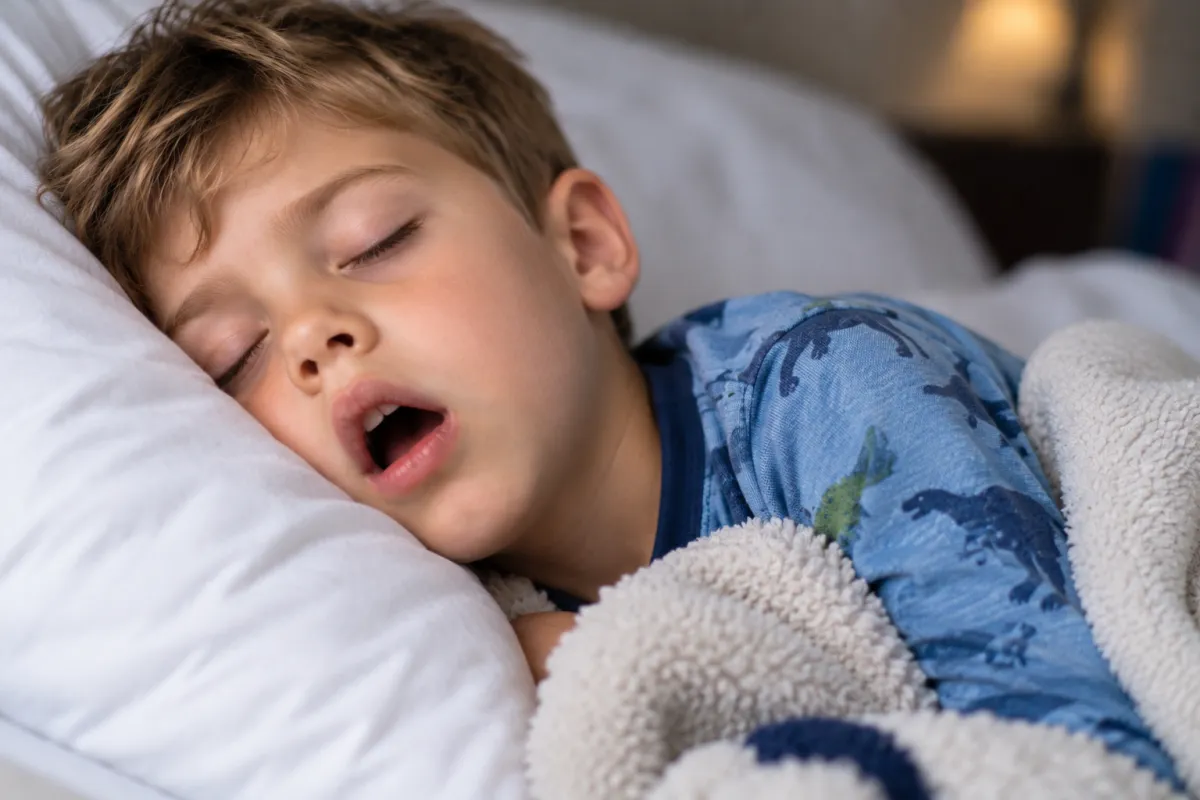
Is their mouth open while they sleep?
Are they breathing through their mouth instead of their nose?
Can you hear snoring, heavy breathing, or unusual breathing sounds?
Do they appear restless or move frequently?
Is their head or neck positioned unusually, as though they are trying to make breathing easier?
These seemingly small signs may indicate that your child is working harder than they should to breathe while sleeping.
Why Mouth Breathing During Sleep Matters
Children are designed to breathe primarily through their nose.
When a child consistently sleeps with their mouth open, it may be a sign that nasal breathing is difficult or that the airway is not functioning as efficiently as it should.
Chronic mouth breathing can be associated with sleep-disordered breathing and may affect sleep quality.
Parents may notice other symptoms during the day without realizing they could be connected to what happens while their child sleeps.
Signs of Pediatric Sleep Apnea and Sleep-Disordered Breathing
Children with disrupted breathing during sleep do not always appear sleepy during the day.
Instead, parents may notice:
Difficulty concentrating
Hyperactivity or behavior that resembles ADHD
Irritability or mood changes
Morning headaches
Difficulty waking up
Bedwetting
Poor school performance
Restless sleep
Frequent tossing and turning
Snoring
Mouth breathing
Dark circles under the eyes
Growth or developmental concerns
These symptoms can have many possible causes, which is why an appropriate evaluation is important.
Does Snoring in Children Mean Sleep Apnea?
Not every child who snores has sleep apnea.
However, frequent or loud snoring should not automatically be dismissed as normal.
Snoring occurs when airflow becomes restricted enough to cause tissues in the airway to vibrate. In some children, airway restriction can become significant enough to repeatedly interfere with breathing and sleep.
Parents may also notice pauses in breathing followed by gasping, snorting, or a sudden change in breathing pattern.
These are important observations to discuss with a healthcare provider.
Why Healthy Sleep Is So Important for Children
Sleep plays an essential role in a child’s physical growth, learning, memory, emotional regulation, and overall development.
When breathing problems repeatedly interrupt normal sleep cycles, a child may spend plenty of hours in bed without receiving the quality of sleep their body needs.
That is why pediatric sleep apnea can sometimes be overlooked. Parents see a child who appears to sleep all night but may not realize how often that child’s sleep is being disrupted.
Pediatric Sleep Apnea Evaluation in Knoxville, TN
If you live in Knoxville or the surrounding East Tennessee area and notice snoring, mouth breathing, restless sleep, or other possible signs of sleep-disordered breathing in your child, an evaluation can help determine what may be contributing to the problem.
At Knoxville Sleep Solutions, Dr. Terrie Cribbs evaluates the clues that may point toward sleep-disordered breathing and helps families determine the appropriate next step.
Don't just count how many hours your child spends in bed. Find out whether they're getting the healthy, restorative sleep their growing body and brain need.
Call Knoxville Sleep Solutions at (865) 247-5570 to schedule an evaluation.

Knoxville Sleep Solutions
Dr. Terrie Cribbs
1547 Downtown West Blvd.
Knoxville, TN 37919
(865) 247-5570
© 2026 Knoxville Sleep Solutions | Managed by Amplified Dental