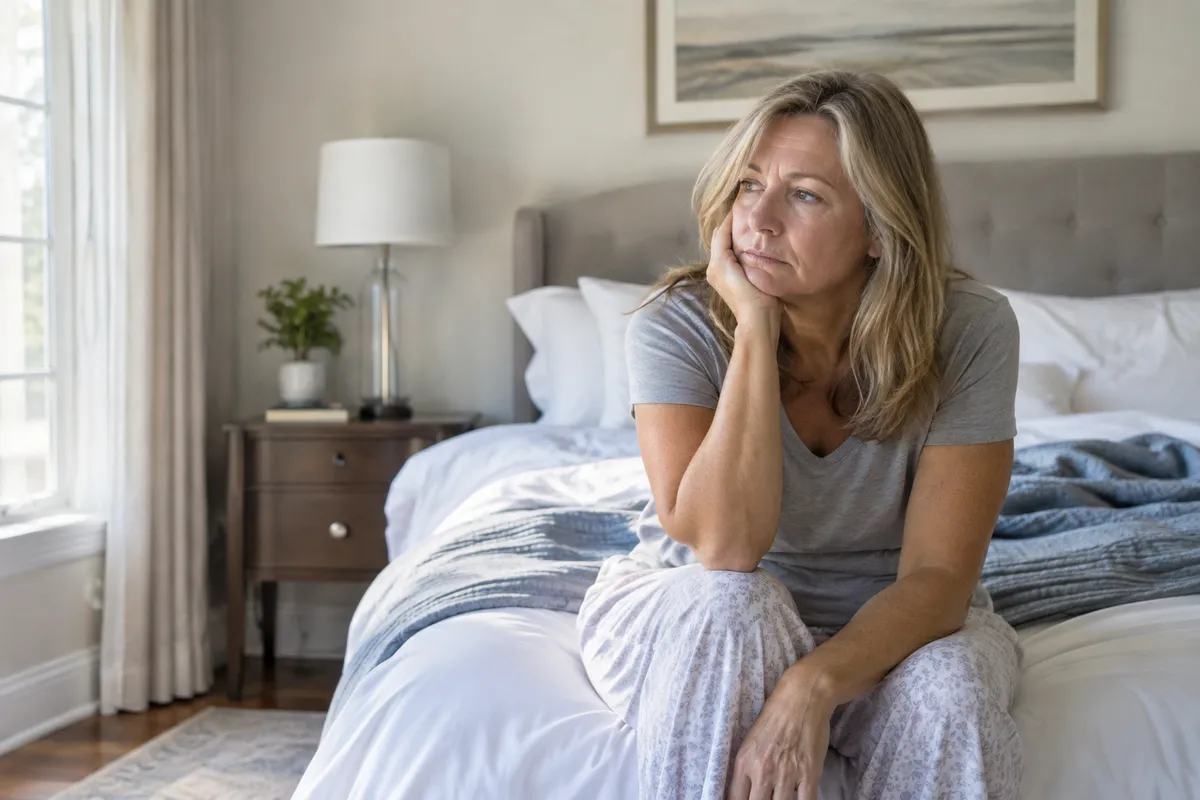
Tired All the Time? 7 Signs Sleep Apnea Could Be Stealing Your Energy
You went to bed at a reasonable hour. You slept for seven or eight hours. The alarm goes off, and somehow you still feel exhausted.
By mid-afternoon, you are reaching for another cup of coffee. You may find yourself struggling to concentrate, fighting the urge to nap, or falling asleep on the couch long before bedtime.
It is easy to blame it on getting older, being busy, stress, or simply not being a “morning person.”
But sometimes the problem is not how many hours you are sleeping.
The problem may be what is happening while you sleep.
Obstructive sleep apnea can repeatedly interrupt breathing and disrupt normal sleep throughout the night. You may not remember waking up, but those interruptions can prevent you from getting the restorative sleep your body needs.
At Knoxville Sleep Solutions in Knoxville, TN, Dr. Terrie Cribbs helps patients identify possible signs of obstructive sleep apnea, complete convenient at-home sleep testing when appropriate, and explore treatment options including custom oral appliance therapy.
If you are tired all the time despite spending plenty of hours in bed, here are seven signs worth paying attention to.
1. You Sleep 7 or 8 Hours but Still Wake Up Exhausted
One of the most frustrating signs of a sleep problem is waking up tired after what should have been a full night of sleep.
With obstructive sleep apnea, your airway repeatedly narrows or becomes blocked while you sleep. Your brain may briefly bring you out of deeper sleep so that normal breathing can resume.
You may not consciously remember these events in the morning.
But your body does.
Instead of experiencing long, uninterrupted periods of restorative sleep, your sleep may be repeatedly fragmented throughout the night.
That means eight hours in bed does not necessarily equal eight hours of quality sleep.
If you consistently wake up feeling as though you barely slept, especially when you believe you are getting enough hours of sleep, it is worth finding out why.
2. You Are Fighting Daytime Sleepiness
Do you find yourself yawning through meetings, struggling to stay alert in the afternoon, or feeling like you could take a nap almost anywhere?
Excessive daytime sleepiness and fatigue are common symptoms associated with obstructive sleep apnea.
The American Academy of Sleep Medicine also recognizes daytime fatigue as one of the symptoms that can impair sleep-related quality of life in people with obstructive sleep apnea.
Daytime sleepiness can become more than an inconvenience. It can affect concentration, productivity, reaction time, and your ability to stay alert behind the wheel.
If coffee has become your unofficial life-support system, it may be time to look at the quality of your sleep rather than simply adding another cup.
3. You Snore Loudly or Regularly
Snoring does not automatically mean you have sleep apnea.
But loud, chronic snoring is one of the most recognizable warning signs of obstructive sleep apnea and should not simply be dismissed as an annoying habit.
When the airway becomes narrowed during sleep, tissues can vibrate as air attempts to move through the restricted space. That vibration creates the sound we recognize as snoring.
More concerning signs can include snoring interrupted by silence, followed by gasping, choking, or suddenly resuming breathing.
Often, the person sleeping beside you notices these signs before you do.
If your spouse has told you that your snoring is getting worse, that you stop breathing during sleep, or that you gasp for air at night, listen to them.
In this case, your bed partner may be giving you some very useful health information.
4. You Wake Up With Morning Headaches or a Dry Mouth
Your first few minutes of the morning can sometimes provide clues about what happened overnight.
People with obstructive sleep apnea may experience morning headaches or wake with a dry mouth or sore throat.
These symptoms alone do not diagnose sleep apnea, but when they occur along with snoring, daytime fatigue, witnessed pauses in breathing, or other symptoms, they are worth discussing with a healthcare professional.
If you regularly wake up with a headache or feel like your mouth spent the night in the Tennessee August sun, do not automatically assume it is normal.
Look at the bigger picture.
5. Your Memory and Concentration Are Not What They Used to Be
Have you ever walked into a room and forgotten why you went there?
That happens to everyone occasionally.
But persistent difficulty concentrating, remembering things, or staying mentally sharp can also occur when sleep quality is poor.
Restorative sleep plays an important role in how you function during the day. When sleep is repeatedly disrupted by breathing problems, you may notice changes in concentration, memory, productivity, or mental clarity.
And once again, it is easy to blame age.
You may think:
“I guess this is just what happens when you get older.”
Not necessarily.
If brain fog is accompanied by snoring, daytime sleepiness, morning headaches, or other possible signs of sleep apnea, the quality of your sleep deserves a closer look.
6. You Are More Irritable Than Usual
Poor sleep can affect more than your energy.
It can affect your mood.
Irritability and mood changes are among the symptoms associated with obstructive sleep apnea.
Think about how you feel after one terrible night of sleep. Now imagine your sleep being disrupted night after night without realizing it.
You may become shorter-tempered, less patient, or simply feel unlike yourself.
Your family may even notice the change before you do.
No, we cannot promise that treating a sleep disorder will suddenly make everyone in your house less annoying.
But getting better-quality sleep certainly gives you a better starting point.
7. Someone Has Seen You Stop Breathing While You Sleep
This is one of the signs you should take seriously.
A bed partner may notice that you stop breathing for short periods during sleep, followed by gasping, choking, snorting, or suddenly taking a breath.
These witnessed pauses in breathing can be a sign of obstructive sleep apnea.
You may have absolutely no memory of these episodes.
That is one reason sleep apnea can go undetected. You are asleep while it is happening.
If someone has repeatedly told you that you appear to stop breathing during sleep, it is worth being evaluated.
Why Am I Tired Even After Sleeping 8 Hours?
There are many possible causes of fatigue, so being tired does not automatically mean you have sleep apnea.
However, if you consistently get enough hours of sleep but still wake up exhausted, poor sleep quality may be part of the problem.
Obstructive sleep apnea can repeatedly interrupt your breathing and fragment your sleep without fully waking you long enough to remember it.
That is why someone can spend eight hours in bed and still wake up feeling as though they barely slept.
If your fatigue occurs along with loud snoring, gasping, morning headaches, dry mouth, difficulty concentrating, or witnessed pauses in breathing, sleep apnea should be considered as one possible cause.
Can Sleep Apnea Cause Daytime Fatigue?
Yes.
Excessive daytime sleepiness and fatigue are well-recognized symptoms associated with obstructive sleep apnea.
When breathing interruptions repeatedly disturb sleep, your body may not receive the continuous restorative sleep it needs.
The result can show up during the day as exhaustion, difficulty concentrating, reduced productivity, irritability, or feeling sleepy when you should be alert.
Treating obstructive sleep apnea can improve daytime symptoms for many patients, but the first step is determining whether sleep apnea is actually present.
How Do I Know If I Have Sleep Apnea?
Symptoms can raise suspicion, but symptoms alone cannot tell you for certain that you have obstructive sleep apnea.
Testing is needed.
At Knoxville Sleep Solutions, appropriate patients can complete a ResMed at-home sleep test in the comfort of their own bed.
The test records information about your sleep and breathing patterns. The data is then evaluated by a board-certified sleep physician who can determine whether sleep apnea is present.
For many people, this eliminates one of the biggest reasons they put off getting evaluated: the idea of spending the night in a hospital or sleep laboratory covered in wires.
Can I Take a Sleep Apnea Test at Home in Knoxville, TN?
Yes.
Knoxville Sleep Solutions offers convenient at-home sleep apnea testing in Knoxville, TN for appropriate patients.
You take the testing device home, sleep in your own bed, and return the device after completing the test.
The information collected during the test is evaluated by a board-certified sleep physician.
If obstructive sleep apnea is diagnosed, the next step is determining which treatment option is appropriate for you.
What Are the Treatment Options for Sleep Apnea?
Treatment for obstructive sleep apnea depends on the individual and may include positive airway pressure therapy such as CPAP, oral appliance therapy, lifestyle modifications, positional therapy, surgery, or other approaches based on a patient's specific needs.
CPAP is an effective treatment for obstructive sleep apnea, but some people have difficulty tolerating it or prefer to discuss another treatment option.
For appropriate adult patients, custom oral appliance therapy may be an alternative.
Clinical guidelines from the American Academy of Sleep Medicine and American Academy of Dental Sleep Medicine recommend that sleep physicians consider prescription oral appliances for adults with obstructive sleep apnea who are intolerant of CPAP or who prefer an alternative therapy. The guidelines also favor custom, titratable appliances over non-custom devices.
How Does an Oral Appliance for Sleep Apnea Work?
A custom oral appliance is worn in the mouth while you sleep.
It is designed to position the lower jaw in a way that helps maintain an open airway and reduce airway obstruction during sleep.
Unlike a CPAP machine, an oral appliance does not require a mask, tubing, or electricity. It is small, quiet, portable, and custom-fitted to the individual patient.
At Knoxville Sleep Solutions, patients who are prescribed oral appliance therapy receive a custom-made appliance that is fitted and adjusted for their individual needs.
An oral appliance purchased online or over the counter is not the same as a custom sleep apnea appliance prescribed as part of appropriate sleep apnea treatment.
Where Can I Get Tested for Sleep Apnea in Knoxville, TN?
If you live in Knoxville or the surrounding East Tennessee area and think you may have sleep apnea, you can begin with a sleep consultation at Knoxville Sleep Solutions.
Dr. Terrie Cribbs and her team can discuss your symptoms and help determine the appropriate next step.
For patients who need sleep testing, Knoxville Sleep Solutions offers ResMed at-home sleep testing, with the results evaluated by a board-certified sleep physician.
If you are diagnosed with obstructive sleep apnea and oral appliance therapy is appropriate and prescribed, Dr. Cribbs can provide a custom-fitted oral appliance and the follow-up care needed to help manage your treatment.
Stop Assuming Exhaustion Is Just Part of Getting Older
Getting older may change plenty of things.
But waking up exhausted every morning should not automatically be written off as another birthday candle on the cake.
If you are getting enough hours of sleep but still feel tired, especially if you also snore, wake with headaches, struggle with concentration, or have been told that you stop breathing during the night, it may be time to find out what is happening while you sleep.
Better sleep begins with understanding the problem.
At Knoxville Sleep Solutions, Dr. Terrie Cribbs helps patients throughout Knoxville and East Tennessee evaluate possible sleep apnea and explore treatment options designed around their individual needs.
Knoxville Sleep Solutions
Dr. Terrie Cribbs
1547 Downtown West Blvd.
Knoxville, TN 37919
(865) 247-5570
Schedule a sleep consultation with Dr. Cribbs to learn whether sleep apnea could be contributing to your daytime fatigue.


